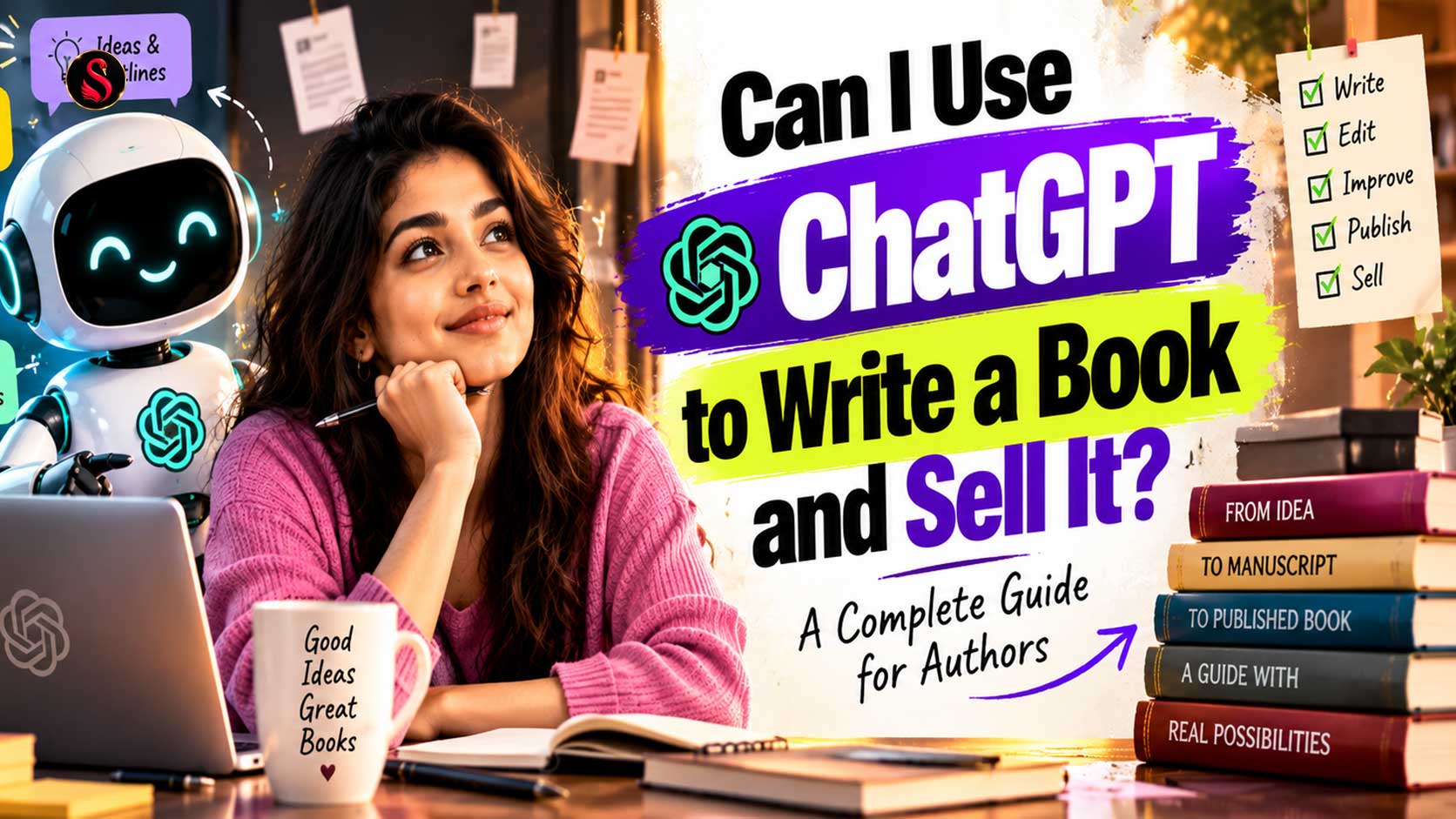
Imagine you have a story in your mind, a collection of poems in your notebook, or years of professional knowledge that you want to turn into a book. You know what you want to say, but you struggle with structuring chapters, finding the right words, editing the manuscript or finishing the project.
Can ChatGPT help you write that book—and can you actually sell it?
Yes, you can use ChatGPT as a tool to help create a book and sell it, subject to applicable law, the rights of others and the rules of your chosen publishing platform. The more important question is how you use it. There is a significant difference between using AI to develop your own ideas into a polished manuscript and publishing hundreds of pages of unchecked, generic AI-generated text.
This guide is for aspiring and established authors, including Hindi writers, poets, novelists, nonfiction writers, educators and first-time self-publishers. It explains the practical process of writing, checking, preparing, publishing and marketing an AI-assisted book, with specific attention to Indian authors.
1. Can You Legally Use ChatGPT to Write a Book and Sell It?
In general, you can use ChatGPT to assist with book creation and commercial projects. OpenAI’s Terms of Use state that, as between OpenAI and the user, and to the extent permitted by applicable law, the user owns the output. However, this does not automatically mean every AI-generated passage is original, exclusive, copyright-protected or free from third-party rights.
Before publishing, understand these four separate issues.
A. Permission to use the output
OpenAI's terms generally permit you to use output commercially, subject to the terms and applicable law. You must still review what you receive, ensure you have the rights to any material you supply, and avoid infringing another person's rights.
B. Copyright protection
Permission to use text and eligibility for copyright protection are not the same thing. Copyright laws differ by country, and the result can depend on how the work was created and the degree of human contribution.
In India, the Copyright Office's explanation of copyright describes the protection of original works and identifies the person who creates a literary work as its author in the ordinary case. The Copyright Act also contains a definition addressing computer-generated works. Applying these provisions to a particular AI-assisted book may require legal analysis of the facts.
In the United States, the U.S. Copyright Office's report on AI-generated works explains that copyright protection depends on sufficient human-authored expressive elements. Merely supplying prompts is not necessarily enough, although human-authored material and sufficiently creative human modifications or arrangements may qualify.
Practical takeaway: Do not assume that every paragraph generated by AI will receive the same copyright protection as original writing created by you. Keep evidence of your own creative contribution and seek qualified legal advice if ownership is commercially important.
C. Third-party intellectual property
AI-generated text may contain inaccurate information, resemble existing material or include suggestions that create legal problems. Never assume a passage is safe merely because ChatGPT produced it.
Avoid copying an existing book, reproducing copyrighted poems or song lyrics without permission, or asking AI to imitate a living author's distinctive style. You can instead describe general characteristics such as “fast-paced literary fiction,” “reflective Hindi poetry” or “clear, accessible nonfiction.”
D. Publishing-platform rules
A platform may impose requirements that are different from copyright law. For example, Amazon Kindle Direct Publishing has specific AI-content disclosure requirements. A book can be legally publishable in principle and still need to comply with the platform's submission rules.
Review the applicable rules before uploading your manuscript.
2. AI-Generated vs AI-Assisted Writing: Know the Difference
This distinction is particularly important for authors who plan to publish through online platforms.
Amazon explains these categories in its official AI content guidelines. Its definitions and requirements can change, so check the live policy at the time of publication.
The important lesson is that editing AI-generated content does not automatically convert it into AI-assisted content under KDP's current definition.
Also, this classification is a platform policy—not a universal legal test for authorship or copyright.
3. What Types of Books Can You Create With ChatGPT?
ChatGPT can support many types of book projects, but it is more useful for some tasks than others. The best approach depends on the genre, the reader's expectations and how much original expertise or creativity the book requires.
A. Hindi poetry collections
Poets can use ChatGPT to:
Explore possible themes and section structures.
Organise an existing collection into meaningful sequences.
Check spelling, punctuation and consistency.
Explore alternative phrasings without automatically accepting them.
Draft an introduction, acknowledgements or back-cover description.
Prepare promotional captions and author biographies.
However, poetry depends heavily on personal voice, imagery, rhythm, emotional truth and cultural context. If every poem is generated from a short prompt, the result may sound generic and resemble thousands of other AI-assisted collections.
A better approach: Start with your own experiences, original lines, observations and emotional ideas. Use AI as an editor or creative sounding board rather than allowing it to replace the distinctive voice that makes the collection yours.
B. Novels and short stories
ChatGPT can help with plot development, character profiles, timelines, research questions and continuity checks. It can also help you identify inconsistent character motivations or an unclear ending.
For a publishable novel, you still need deliberate character development, believable dialogue, a consistent narrative voice, meaningful conflict and a satisfying story arc.
Do not rely on AI to produce a complete novel in one prompt and assume the result is ready for readers. Review every chapter for repetitive descriptions, plot holes, clichés, continuity errors and unearned emotional moments.
C. Nonfiction and educational books
This is one area where AI can be useful for organising complex information into an accessible structure.
Examples include:
Career and professional development.
Study guides and learning resources.
Business and entrepreneurship.
Personal productivity.
General educational material.
Practical guides based on the author's own experience.
For nonfiction, factual verification is essential. AI can confidently produce an incorrect date, quotation, legal claim, statistic or reference. Verify every important factual statement against reliable sources.
If your book covers medicine, finance, law or another high-stakes subject, obtain appropriate expert review.
D. Children's books
ChatGPT can assist with age-appropriate vocabulary, story structures, discussion questions and activity ideas. However, the author must check developmental suitability, originality, cultural sensitivity and the quality of any illustrations.
E. Translations and bilingual books
AI can help create a first translation draft, but literal translation often misses cultural meaning, idioms, poetic rhythm and tone. A competent human-language reviewer should assess the complete manuscript, particularly for poetry and literary fiction.
For Hindi books, carefully check मात्रा, वर्तनी, विराम-चिह्न, gender agreement, idioms, dialogue and consistency of transliteration.
4. How to Write a Book With ChatGPT: A Practical Step-by-Step Process
The most reliable way to use ChatGPT is to work through a defined editorial process rather than asking it to produce an entire book in one response.
Step 1: Define the reader and the book's purpose
Before writing, answer these questions:
Who is the intended reader?
What will the reader learn, feel or experience?
Why should the reader choose this book instead of similar books?
What will make this book distinct?
Is the book intended for print, eBook or both?
What language, reading level and approximate length are appropriate?
For example, “a motivational book” is too broad. A more useful concept might be “a practical Hindi motivational book for college students facing career uncertainty, with original examples, reflection exercises and actionable advice.”
This clearer brief gives AI a defined purpose and gives you a basis for evaluating the manuscript.
Step 2: Build a book brief
Create a document containing the working title, genre, audience, tone, central promise, chapter plan, target length, research requirements and topics to avoid.
You should also identify what must come from you personally: your experiences, original poems, interviews, case studies, research, professional expertise or fictional world.
Step 3: Create and review the outline
Ask ChatGPT to suggest a chapter structure, but do not accept it automatically.
For each proposed chapter, ask:
Does it serve the reader?
Does it repeat another chapter?
Is there enough material to justify its place?
What evidence, examples or original material is needed?
Does the sequence make sense?
What should the reader be able to do or understand after reading it?
Revise the outline until you can explain the purpose of every chapter.
Step 4: Research before drafting
For nonfiction, use reliable primary sources wherever possible, such as official government documents, original research, legislation, technical documentation and credible subject-matter sources.
Maintain a source log containing the claim, source title, URL, publication date and date accessed. Verify quotations word for word and never invent references to make the book appear researched.
For fiction, research the historical period, geography, professions or cultural context relevant to the story. Distinguish documented facts from creative invention.
Step 5: Draft one chapter at a time
Work chapter by chapter using your approved outline. Give ChatGPT the chapter's purpose, intended reader, key points, word-count range and the material you want included.
Review the draft before moving forward. Ask the tool to identify weak reasoning, repeated explanations and unsupported claims, rather than simply requesting more words.
If the first chapter has an informal, reflective voice, later chapters should maintain that voice. Keep a short style guide to record terminology, spelling preferences, character names, point of view and tone.
Step 6: Add your own creative contribution
This is where a draft becomes a book with a distinct point of view.
Add material that AI cannot reliably supply on your behalf, such as:
Your actual experiences and observations.
Original interviews and properly obtained permissions.
Your own poems, arguments, research or interpretations.
Specific examples from your work or community.
Original illustrations, exercises, questions or frameworks.
Deliberate creative decisions about structure, voice and meaning.
Do not invent personal experiences or present fabricated case studies as real. Clearly identify illustrative or fictional examples when readers could otherwise mistake them for facts.
Step 7: Edit for substance, not just grammar
Perform separate editing passes:
Developmental editing: Does the book work as a whole?
Structural editing: Are the chapters organised logically?
Line editing: Is the language precise, engaging and consistent?
Copyediting: Are grammar, spelling, punctuation and style consistent?
Proofreading: Are there remaining errors in the final laid-out pages?
AI can assist with these stages, but a careful human review is especially valuable before a book goes to print.
Step 8: Check originality and rights
Before publication, check quotations, poems, song lyrics, photographs, illustrations, tables and other third-party material. Confirm that you have permission or another valid legal basis for using material where required.
Similarity-checking tools can help identify passages that need investigation, but a similarity score alone cannot establish plagiarism or prove that a book is legally safe. Review matches in context and keep records of the sources and permissions you rely on.
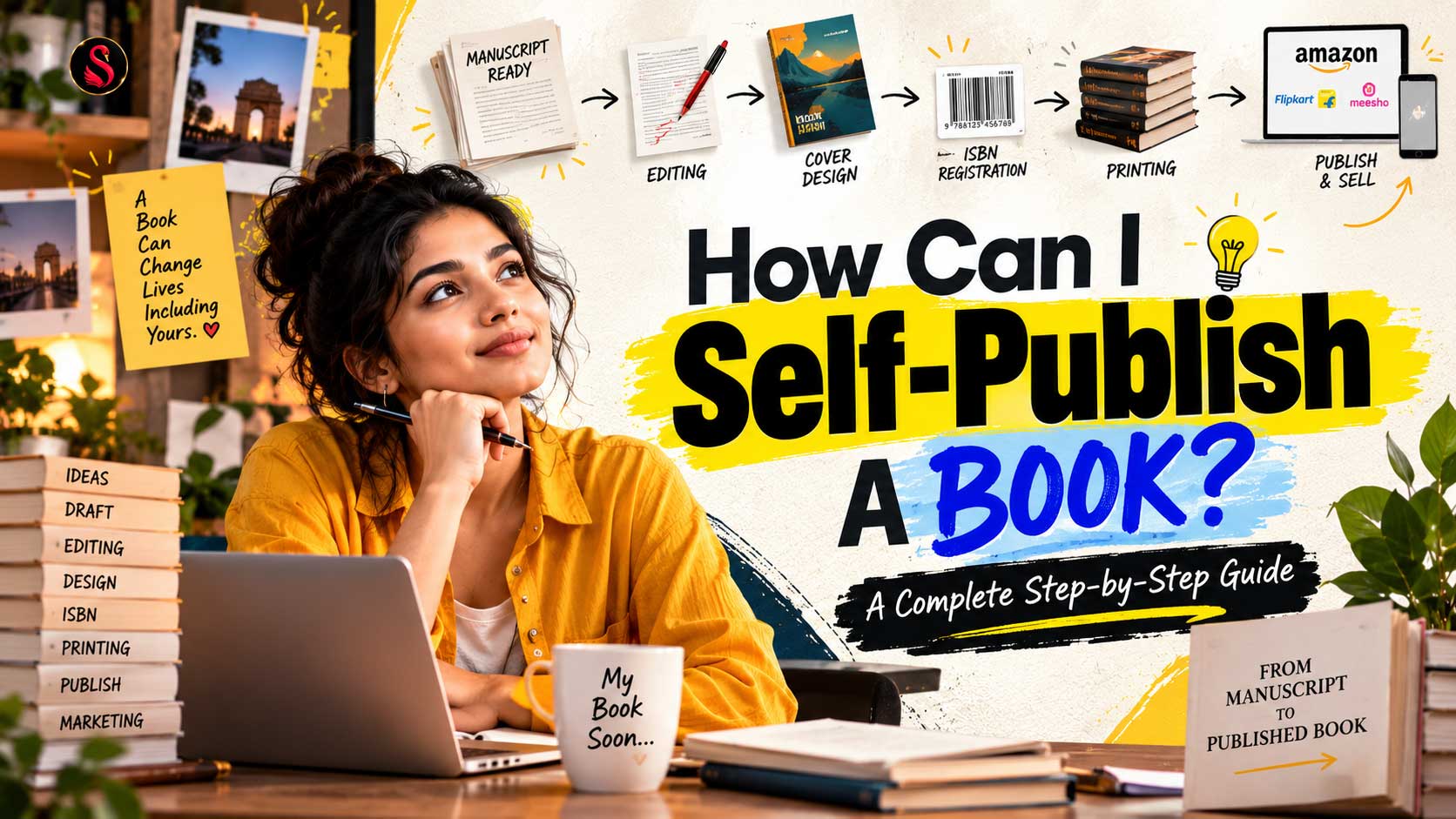
Step 9: Prepare the manuscript for publication
A manuscript is not yet a finished book. You may need:
Interior formatting and typesetting.
A professionally prepared cover.
Title and copyright pages.
Contents page, acknowledgements and author biography.
ISBN and publication metadata, where applicable.
Print-ready PDF and/or a validated eBook file.
Final page-by-page proofreading.
Check that fonts, page size, margins, page numbers, images and chapter breaks meet the chosen printer's or platform's specifications.
Step 10: Publish, promote and learn from readers
Choose your publishing route, set a realistic price, prepare the book description and discoverability keywords, and build a marketing plan.
After release, monitor reader feedback, legitimate sales data and common complaints. Use these insights to improve the next edition rather than assuming that publication alone will generate sales.
5. Useful ChatGPT Prompts for Authors
Use these as starting points. Replace the bracketed details with your own book information, and provide original material wherever possible.
Prompt 1: Develop the book concept
“Act as an editorial development assistant. Help me evaluate this book idea: [describe the idea]. My intended reader is [audience]. Identify the reader's main needs, competing or similar book categories, possible gaps in my concept, questions I need to research, and ways to make my book distinctive. Do not invent market data or claim that the idea is commercially validated without evidence.”
Prompt 2: Create a chapter outline
“Using the following book brief, propose a chapter outline with a clear purpose for every chapter. Identify overlapping topics, missing subjects, necessary research and suggested original examples. Do not draft the complete book yet. Book brief: [insert brief].”
Prompt 3: Draft from my own material
“Help me turn the notes below into a first draft for Chapter [number]. Preserve my intended meaning and voice. Do not invent personal experiences, sources, quotations or factual details. Mark missing evidence with [VERIFY] and ask questions where important information is absent. Notes: [insert your material].”
Prompt 4: Review a chapter
“Review this chapter as a critical editor. Identify repetitive passages, vague claims, weak transitions, inconsistent terminology, unsupported factual statements and areas that lack useful examples. Separate factual concerns from stylistic suggestions. Do not rewrite everything unless I ask you to. Chapter: [insert text].”
Prompt 5: Check a Hindi manuscript
“Review this Hindi manuscript for spelling, मात्रा, punctuation, grammar, gender agreement, repeated phrases and inconsistent terminology. Preserve the author's voice and intended meaning. Show each suggested change with the original wording, the proposed correction and a short explanation. Do not automatically rewrite poems or change their emotional meaning.”
Prompt 6: Prepare publication materials
“Using only the verified information below, propose a book description, author biography, back-cover copy, relevant search keywords and a short launch announcement. Do not invent awards, qualifications, reviews, bestseller status or sales figures. Book details: [insert verified details].”
Important: A prompt is not a substitute for fact-checking, originality review, permissions or professional editing. It is a way to make the process more structured.
6. Can You Copyright a Book Written With ChatGPT?
This is one of the most important questions to resolve before investing in editing, printing and marketing.
There is no universal answer that applies identically to every country and every type of AI use.
What Indian authors should understand
India's copyright framework protects original works and contains rules concerning authorship and computer-generated works. The official IP India copyright guidance is a useful starting point.
However, an author should not interpret this as a blanket guarantee that every passage generated by ChatGPT is automatically protected, exclusively owned or free from competing claims.
The result can depend on the facts, the relevant legal provisions and how the work was created. Where ownership, licensing or a commercial dispute is material, obtain advice from a qualified intellectual-property professional.
Practical steps to strengthen your records
Keep dated drafts, outlines, research notes and revision histories.
Save your own original poems, notes, interviews and source material.
Record the meaningful creative decisions and revisions you made.
Keep permissions and licences for third-party content.
Identify which passages or assets were AI-generated and which were created or edited by you.
Avoid making unsupported claims about exclusive ownership or copyright registration.
Copyright registration, where available, is not a substitute for having the necessary rights in the first place. For general information, consult IP India's copyright resources.
7. Can You Publish a ChatGPT-Written Book on Amazon KDP?
Amazon Kindle Direct Publishing allows eligible books that comply with its content and submission requirements. Its AI-content policy is especially important for authors who use ChatGPT.
According to KDP's official AI content guidelines:
You must inform KDP about AI-generated text, images or translations when publishing a new book or editing and republishing an existing one, as specified by its policy.
AI-generated content remains AI-generated under KDP's definition even if you substantially edit it afterward.
AI-assisted content generally refers to material you created yourself and then used AI to edit, refine or check, or where AI helped brainstorm but you created the actual content yourself.
You are responsible for ensuring your content complies with KDP's content guidelines and applicable rights requirements.
Do not misclassify AI-generated text as AI-assisted simply because you proofread it.
What about selling books in India?
Platform availability, print distribution and language support are separate questions from whether AI was used. Check the current KDP help pages for the specific format and language you plan to publish.
For example, KDP's published language guidance has described support for certain Indian-language Kindle eBooks while Indian-language paperback publishing has had limitations. Platform features can change, so verify the current rules before planning your distribution around a particular format.
If you want to publish a Hindi paperback, compare currently available print and distribution options instead of assuming that every eBook platform can also print and distribute it in India.
8. Can You Sell an AI-Written Book Without Telling Readers?
This question has two different parts: platform disclosure and reader transparency.
First, follow any mandatory platform disclosure requirements. For KDP, use its actual AI-generated versus AI-assisted definitions and answer the relevant publishing questions accurately.
Second, consider whether readers would reasonably expect an explanation of how the book was created. Transparency is particularly valuable when the book makes claims about personal experience, research, expertise or professional qualifications.
Do not claim that an AI-generated account is your own lived experience. Do not invent interviews, endorsements, credentials or expert reviews. If you promise original reporting or personal testimony, make sure the manuscript actually contains it.
Not every use of an editing assistant needs a prominent statement in the book. The appropriate approach depends on the nature of the work, the platform's rules, any contractual commitments and applicable law.
9. How to Make an AI-Assisted Book Worth Buying
A book can be technically publishable and still fail to satisfy readers. Commercial value comes from the reader's experience, not from the speed at which the manuscript was generated.
Make a specific promise to the reader
A vague title such as “Success in Life” gives readers little reason to choose your book. A more focused concept explains who the book serves and what it offers.
Remove generic and repetitive writing
Look for paragraphs that repeat the same point, motivational statements that say nothing concrete, unnecessary introductions and conclusions that merely restate the chapter.
Replace them with original examples, practical steps, credible evidence, meaningful scenes or a sharper argument.
Add material readers cannot get from any generic prompt
Depending on your genre, this might include original poetry, interviews, specialist knowledge, field research, cultural context, carefully developed characters or a distinctive narrative voice.
Invest in the reader's experience
A well-written book also needs appropriate formatting, readable typography, a professional cover, accurate metadata and a clear description. For print books, inspect the final proof before approving a print run.
Build trust
Be accurate about your qualifications, research methods, sources and the book's contents. Genuine reader trust is more valuable than exaggerated claims such as “guaranteed bestseller” or “100% unique” without evidence.
10. What Are the Common Mistakes When Using ChatGPT to Write a Book?
11. How Much Does It Cost to Publish a Book Written With ChatGPT?
Using ChatGPT does not remove the other costs of publishing. Your budget depends on manuscript length, language, editing requirements, cover design, format, print quantity, distribution and marketing.
There is no single reliable price for every book. Request an itemised quotation based on your actual manuscript and publishing requirements.
For more detailed budgeting, read our related guide: How Much Does a 200-Page Book Cost in India?. If the URL changes when you publish the article, update this internal link to the final live address.
If you are still deciding between a traditional publisher and self-publishing, read: How to Self-Publish a Book in India: A Complete Step-by-Step Guide. Replace the suggested URL if your published page uses a different slug.
12. Should You Publish the Book Yourself or Work With a Publishing House?
There is no single best route for every author. The right choice depends on how much control you want, what services you need and how much responsibility you are prepared to handle.
Self-publishing may suit you if:
You want substantial control over your book's content and presentation.
You are comfortable coordinating editing, design, formatting and distribution.
You can compare service providers and review contracts carefully.
You want to manage your own publishing schedule and marketing.
Working with a publishing service may suit you if:
You need help turning a manuscript into a print-ready book.
You want professional assistance with editing, cover design or typesetting.
You need guidance on ISBN, metadata or distribution options.
You would rather coordinate your publishing process through one service provider.
Before choosing a publisher, ask for an itemised scope of work, delivery timeline, payment schedule, revision policy, distribution details, rights terms and written clarification about royalties and ownership.
Do not assume that every publishing package includes editing, ISBN assistance, printing, retailer placement, marketing or guaranteed sales. Ask what is included and what costs extra.
How Swarnim Sahitya can help
If you have a manuscript—or an AI-assisted draft that you have reviewed and refined—you can explore the publishing support available through Swarnim Sahitya Publishing House.
Before submitting, prepare your manuscript, a short book description, details about the intended audience and any specific editing, formatting, design or distribution support you need. Discuss your requirements and confirm the scope, cost and terms before proceeding.
13. A Pre-Publication Checklist for AI-Assisted Books
Use this checklist before you spend money on cover design, printing or promotion.
I can clearly explain the book's intended reader and purpose.
I have reviewed the outline and every chapter.
The manuscript has a consistent voice and does not rely on repetitive filler.
Important facts, quotations, dates, statistics and references have been verified.
I have reviewed potentially infringing passages and third-party material.
I have obtained permissions or licences where necessary.
I have kept useful drafts and records of my creative contribution.
I understand the relevant copyright and ownership questions.
I have checked the publishing platform's current AI-content policy.
I have disclosed AI-generated content where the platform requires it.
The book has received appropriate human editing and proofreading.
The cover, interior layout and metadata are ready for the intended format.
I have reviewed the final proof or eBook preview.
I have checked the publishing agreement, fees, rights and royalty terms.
I have a realistic plan to reach the book's intended readers.
14. Frequently Asked Questions
Can I use ChatGPT to write a book and sell it on Amazon?
In general, you can use ChatGPT to help create a book for commercial publication, provided you comply with applicable law, third-party rights and Amazon KDP's current content requirements. KDP requires disclosure of AI-generated text, images and translations under its stated policy. Check the official KDP AI content guidelines before submitting.
Can I put my own name on a book written with ChatGPT?
You should not make false claims about how the book was created or misrepresent your experiences, expertise or authorship. The legal treatment of AI-assisted and AI-generated work depends on the circumstances and applicable law. If you intend to claim exclusive copyright or enter into a contract based on authorship, obtain advice appropriate to your jurisdiction.
Can I copyright a book written entirely by ChatGPT?
Do not assume that a book generated entirely by AI automatically qualifies for copyright protection in every country. The legal position can depend on the applicable law and the facts. In the United States, the Copyright Office has stated that sufficient human-authored expression is important to copyrightability. For India, consult the official copyright resources and a qualified professional if your ownership claim is commercially significant.
Does Amazon reject every AI-written book?
No. KDP's policy does not say that every AI-generated book is automatically prohibited. It distinguishes AI-generated from AI-assisted content and requires disclosure of AI-generated content. The book must also satisfy KDP's other content and rights requirements.
Can I use ChatGPT to write a Hindi book?
Yes, ChatGPT can assist with Hindi outlines, drafting, editing and formatting preparation. However, review grammar, मात्रा, idioms, tone, cultural context and literary quality carefully. Verify the platform's current support for your chosen language and format, particularly for print editions.
Can I use ChatGPT to write a poetry book?
You can use it to brainstorm themes, organise a collection, review language or explore possible revisions. For a distinctive poetry collection, preserve your own voice, experiences, imagery and creative decisions. Review any AI-generated poems carefully for originality, quality and rights issues.
Will a book written with ChatGPT sell?
It may sell, but no tool can guarantee demand or sales. Results depend on the book's usefulness or literary quality, audience fit, pricing, cover, description, distribution, reviews and marketing. Test your concept with intended readers and invest in quality before expanding your promotion.
Do I have to tell readers that I used AI?
Follow mandatory disclosure requirements from the platform or any relevant contract. Beyond that, consider transparency where readers might reasonably expect to know how the book was created—for example, when you describe it as original reporting or personal testimony. Do not misrepresent AI-generated experiences or research as your own.
Is ChatGPT a replacement for a professional editor or publisher?
Not completely. ChatGPT can assist with many editorial tasks, but it does not guarantee factual accuracy, literary quality, rights clearance, print-ready formatting or distribution. Professional help can be valuable when the manuscript needs specialist editing, language expertise, design or publishing support.
Final Thoughts: Use AI to Strengthen Your Book, Not to Skip the Work
ChatGPT can make book creation more accessible. It can help an author move from a vague idea to a structured outline, develop difficult sections, review language and prepare supporting materials.
But a book worth buying still needs a clear purpose, original value, careful research, editorial judgement and a thoughtful publishing plan. The goal should not be to generate the most pages in the shortest time. It should be to create a book that delivers something meaningful to its readers.
If you have a manuscript ready—or need guidance on preparing an AI-assisted draft for publication—visit Swarnim Sahitya to explore your publishing options and discuss the services your book actually needs.
Your idea may start with AI. The quality, integrity and value of the finished book depend on the decisions you make as its creator.
Comments (0)
Join the conversation with fellow authors.
Login to your Author Account to comment, like comments and reply.